Moon
Extremely bright and full of surface detail.
Guide
Stargazing in Chennai is possible, even under bright city skies. You can start with the Moon, planets, clusters, and bright nebulae from the city, then join CAC for repeatable trips to darker Bortle 4–5 skies outside Chennai.
The Bortle scale is a simple way to describe how dark or light-polluted a sky is. Bortle 1 is an exceptionally dark sky, while Bortle 9 is a heavily light-polluted city sky.
Chennai is bright. Most of the city sits under Bortle 8–9 skies, which means naked-eye stars are limited and the Milky Way is usually washed out.
But astronomy is still very possible from here. You can observe the Moon, planets, double stars, star clusters, bright nebulae, and a few galaxies from Chennai with the right target, timing, and equipment.
Light pollution in Chennai limits faint targets, but many rewarding objects are still within reach from rooftops, terraces, and city observing spots.
Best for Rooftops, Terraces, Public Viewing, and Casual Observing From Chennai.
Wide, Bright Objects That Are Easier to Enjoy with Binoculars or a Low-Power Telescope.
Objects That Show Meaningful Detail Through a Telescope, Even Under City Light Pollution.
Objects That Improve Dramatically When You Travel to Bortle 4 to 5 Skies Outside the City.
Light pollution brightens the sky background, but many targets are still visible because they are bright, compact, or high contrast.
City astronomy is not a failed version of dark-sky astronomy. It is a normal part of amateur astronomy. The key is choosing the right targets.
Extremely bright and full of surface detail.
Bright, compact, and high contrast through a telescope.
Point-like targets that are less affected by sky glow.
Bright individual stars often show well from the city.
Compact objects that improve with telescope aperture.
Some respond well to UHC and OIII filters.
Possible with aperture, patience, and good conditions.
Choose city-friendly targets, observe often, and try telescope viewing in Chennai before you travel outside the city for darker skies.
Moon, planets, nebulae, and galaxies captured by CAC members from Chennai and nearby skies — proof that rewarding astronomy is possible even under light-polluted conditions.


You do not need perfect skies to begin. For most beginners, moving from Bortle 8–9 to Bortle 4–5 is already a major upgrade.
Darker skies reveal more detail in nebulae and galaxies — fainter gas, dust lanes, and structure that light pollution washes out from the city. The Orion Nebula (M42) is a good example: it is visible from Chennai, but shows noticeably more through a telescope once you reach Bortle 4–5 skies outside the city.
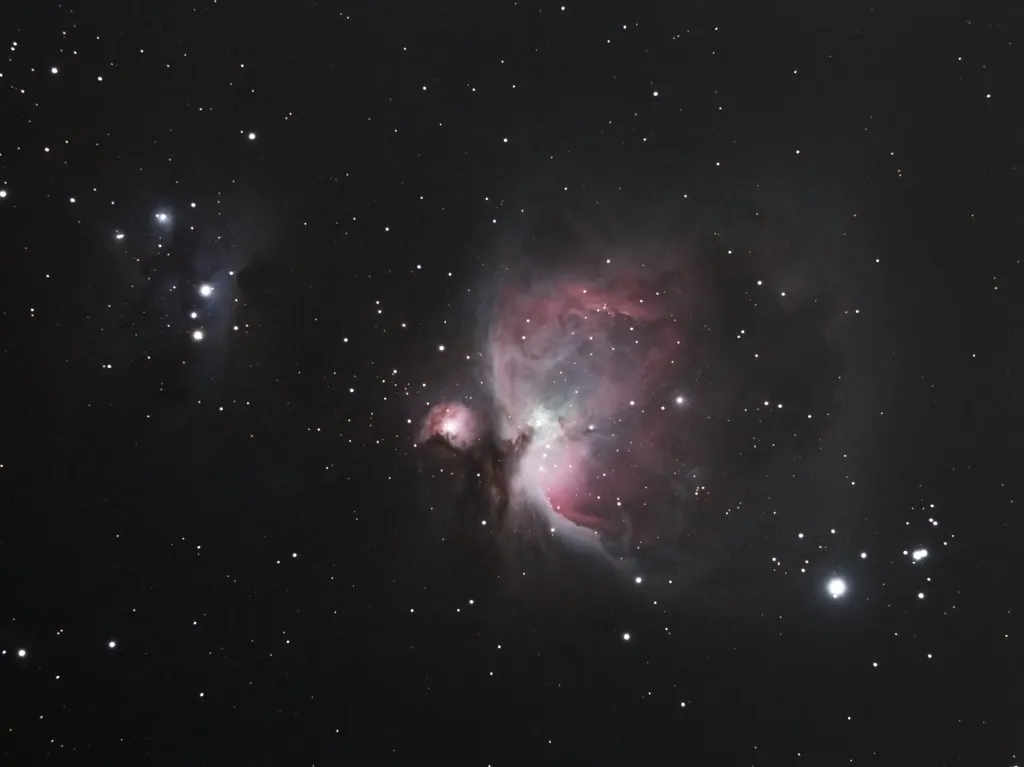
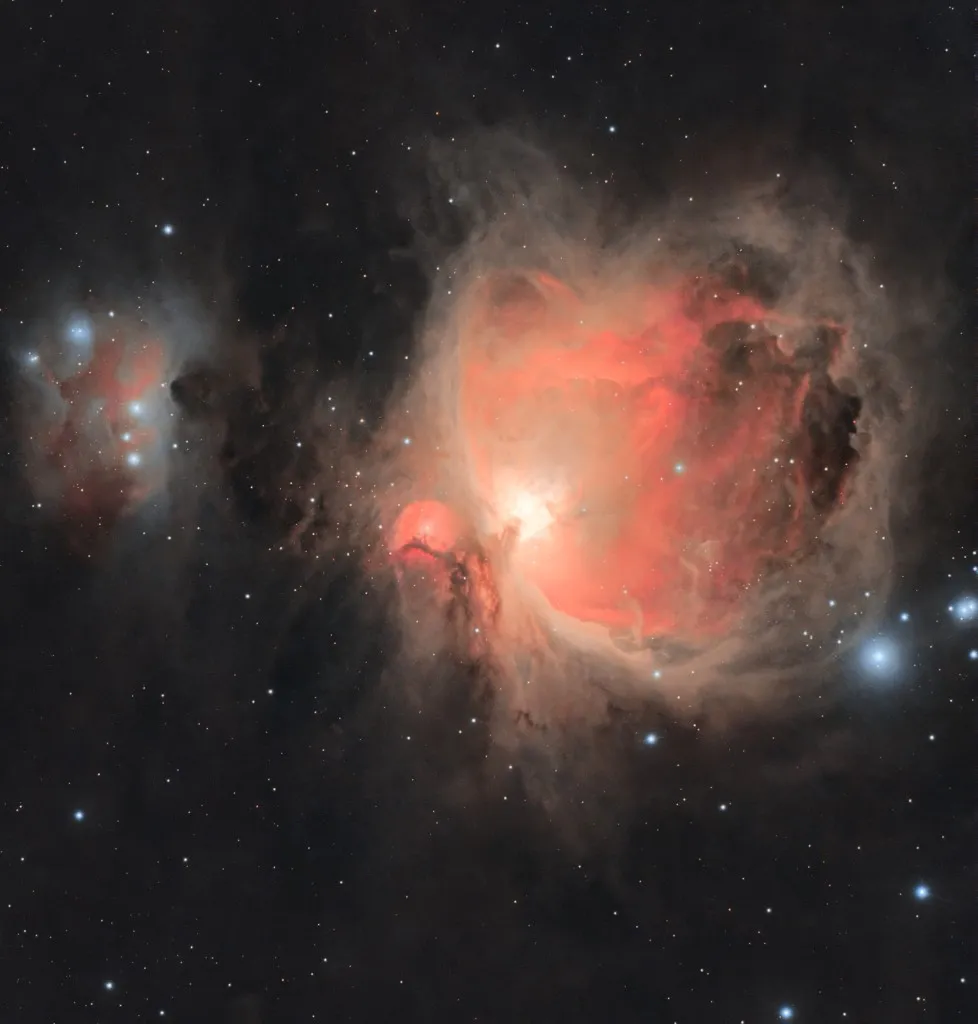
Long-exposure astrophotos processed to illustrate the contrast. Through the eyepiece, both views are greyish to the eye — filters and darker skies help reveal more structure.
Bortle 8–9
Bortle 4–5
Want to see these through a telescope? Join a CAC star party or a public sidewalk astronomy session.
Social media can make stargazing look harder than it is — dramatic Milky Way photos from remote deserts often suggest that real stargazing only happens under near-perfect skies.
Many people assume that good stargazing means travelling to places like Ladakh, Sikkim, Spiti, the Andamans, or remote Himalayan regions.
Those places have excellent skies, but they are not required to begin astronomy.
If you live in Chennai, you can start from your terrace, rooftop, balcony, school ground, or neighbourhood park. The Moon, planets, bright stars, clusters, and some nebulae are visible even from the city with the right target and equipment.
For a much better sky, you usually do not need a once-in-a-year expedition. A practical 2–4 hour trip outside Chennai can already take you to skies that are dramatically better than the city core. See our guide to best places to stargaze near Chennai to compare exact sites before you travel.
The goal is not to chase perfect skies every time. The goal is to observe more often.
Remote dark-sky locations are wonderful, but they are not the starting point. For most beginners, Bortle 4–5 skies outside Chennai are more than enough for a memorable night under the stars.
Good stargazing does not have to mean Ladakh. It can begin much closer to home.
“Good skies that you can visit often are better than perfect skies that you almost never visit.”
From core Chennai, light pollution usually washes out the Milky Way. But the Milky Way near Chennai can be seen from darker sites outside the city on the right night.
The best conditions are:
To the naked eye, the Milky Way appears as a faint cloudy band. It will not look like dramatic long-exposure photos.
For photography, tracking, stacking, and careful processing reveal much more detail than the eye can see.
Begin with the Moon, planets, double stars, open clusters, globular clusters, and bright nebulae.
Objects near the horizon suffer from haze, sky glow, and atmospheric distortion. Targets higher in the sky usually look better.
Stand in shadow where possible. Avoid direct streetlights, terrace lights, and vehicle headlights. Use a red light if you need to see in the dark.
Binoculars are simple, portable, and excellent for the Moon, clusters, bright star fields, and learning the sky.
UHC and OIII filters can improve contrast on objects like the Orion Nebula, Ring Nebula, and Dumbbell Nebula.
Tracking, stacking, and filters make astrophotography from Chennai possible, even under light-polluted skies.
Shared telescopes, experienced observers, and group travel make stargazing easier and more enjoyable.
If you are looking for stargazing near Chennai, telescope viewing in Chennai, or a beginner-friendly astronomy club in Chennai, these are the easiest ways to start. CAC is volunteer-run and free to join.
Chennai star parties are group trips to darker Bortle 4–5 skies outside the city. These usually include shared telescopes, beginner guidance, sky tours, and time under darker skies. They are family-friendly — kids are welcome.
Free public telescope viewing in city spaces. Anyone passing by can look through a telescope and ask questions.
Start from your rooftop, balcony, or terrace. The Moon, planets, clusters, nebulae, and some galaxies are within reach. Use a light pollution map to scout nearby Bortle 4–5 sites when you want darker skies.
Join an upcoming CAC star party — shared telescopes, experienced observers, and darker skies outside the city.
Join Chennai Astronomy Club — free, volunteer-run, and open to beginners. Follow star party announcements on the forum and come observe with us under Chennai skies or at our next Bortle 4–5 site.